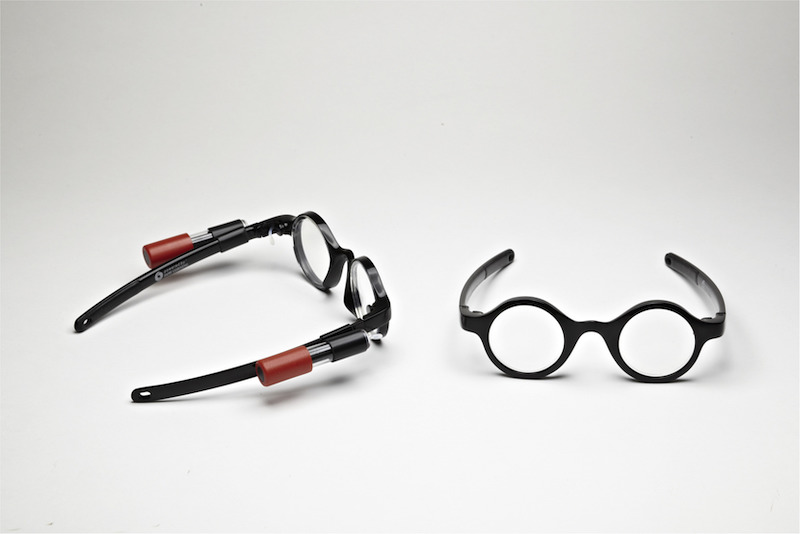
New research, led by Queen’s University Belfast, Northern Ireland, show that wearing self-adjusting for children living in remote and less developed áreas can improve their vision and educational opportunities.
Poor eyesight and lack of quality education are intrinsically linked. In less developed and remote parts of the world, where the access to health professionals is limited, children who do not wear the glasses they need are exposed to a greater risk of falling behind in education due to lack of vision.
This research is based on an ongoing service program conducted by Orbis International and the Zhongshan Ophtalmic Center (ZOC) in Guanzhou, China.
Professor Nathan Congdon of the Queen’s University Center for Publich Health in Belfast and Orbis International Research Director and Visiting Professor at ZOC explains that “although chinese children have one of the highest myopia rates in the world, only 15-20% of children who need glasses and live in rural areas have them”.
The research, published in Ophthalmology, involved myopic children aged 11 to 16 who live in rural areas of southern China’s Guanddong province. The children were given standard prescription glasses or self-adjusting glasses só they could perform “self-refraction”, optimizing their own eyesight.
Researchers have found that self-adjusting glasses are a good option for this need. Nathan Congdon concluded: “this research provides additional support for the idea that self-refraction can contribute to children’s eyesight health in this situation. We found out that self-adjusting glasses offer essentially the same standard as prescribed glasses in terms of accuracy and vision”.
More here